
Mini Product Launches: A Simple Playbook for Small Online Stores
Mini Product Launches: A Simple Playbook for Small Online Stores

Huge sales and product launches look exciting on social media, but behind the scenes they’re a ton of work. Planning a big promotion can feel so overwhelming that you push it off for “later”… and weeks go by without you really promoting anything.
There’s a calmer, more realistic way to keep sales moving: mini product launches. Instead of planning massive events, you pick one existing product, give it a fresh angle, and promote it for just 5–7 days. It’s simple, repeatable, and perfect for small online stores that don’t have a big marketing team.
What Is a Mini Product Launch?
A mini launch is a short, focused promotion where you highlight one product (or a very small set of related items) across your website, email list, and social channels for about a week.
You’re not creating a new collection or planning a giant sale. You’re simply saying: “This is the product we’re shining a light on this week, and here’s a fun reason to pay attention to it.”
- One product focus: You choose a single hero item or bundle.
- One main angle: A theme like season, problem solved, or special use case.
- Short time frame: Usually 5–7 days of light, consistent promotion.
- Light assets: A few photos, simple graphics, and short messages you can reuse.
Instead of disappearing between big sales, you stay present with your customers in a way that feels natural—not spammy or exhausting.
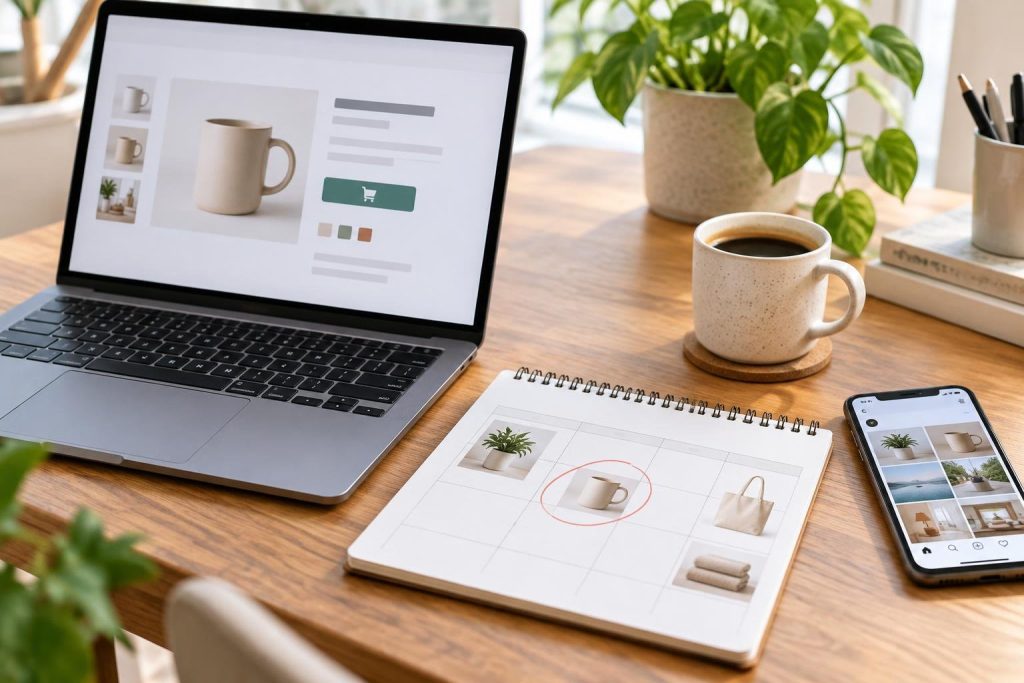
Step 1: Pick Your Weekly Focus Product
Start by choosing one product that has a clear benefit and is easy to talk about. Don’t overthink it—your goal is progress, not perfection.
Good mini-launch candidates
- A steady seller you’d like to boost even more
- A hidden gem that doesn’t get much attention
- A product that’s seasonal or timely this month
- An item with great reviews or customer photos
Questions to help you choose
- Is this easy to explain in one or two sentences?
- Can I show this product in action with a quick photo or short video?
- Is there a clear problem it solves or a moment it improves?
- Can I imagine at least three different content ideas for it?
If you’re stuck, pick your most popular item. Familiar products are easier to promote and already have proof that customers want them.
Step 2: Give It a Fresh Angle
Your product might be the same, but your story doesn’t have to be. A fresh angle answers the question: “Why this product, this week?”
| Angle Type | Example Ideas |
|---|---|
| Seasonal | “Back-to-school desk kit”, “Summer skincare essential”, “Holiday gift under $50” |
| Use case | “Work-from-home starter pack”, “Weekend baking bundle”, “Beginner-friendly art set” |
| Customer story | “Inspired by how Sarah organizes her tiny kitchen” |
| Problem solved | “Finally keep your cables untangled and labeled” |
| Bundle or bonus | “Buy the planner, get the printable checklist free this week” |
You’re not changing the product; you’re changing the context. The more specific, the better:
- Instead of “tote bag,” try “market-day tote that stands up in the cart.”
- Instead of “soy candle,” try “10-minute wind-down candle for busy nights.”
The product stays the same; the story changes every week.
Step 3: Build a Simple 5–7 Day Plan
Now turn your idea into a light promotion calendar. You don’t need fancy tools; a notes app or paper planner works fine. Here’s a simple 7-day plan you can reuse each week.
| Day | Action |
|---|---|
| Day 1 | Update your homepage banner or featured section with the focus product and angle. |
| Day 1 | Send a short email: introduce the product, angle, and any bonus (like free shipping or a small add-on). |
| Day 2 | Post a quick photo or video of the product in use on your main social platform. |
| Day 3 | Share 1–3 customer reviews or messages (screenshots or quotes) about this product. |
| Day 4 | Post a behind-the-scenes or “how it’s made / how I use it myself” story. |
| Day 5 | Answer 3–5 common questions about the product in a post, Story, or short video. |
| Day 6–7 | Reminder email + social post: highlight last chance for any bonus or just gently recap benefits. |
If 7 days feels like too much, shrink it to 4–5 days and skip a couple of steps. Consistency matters more than doing everything.
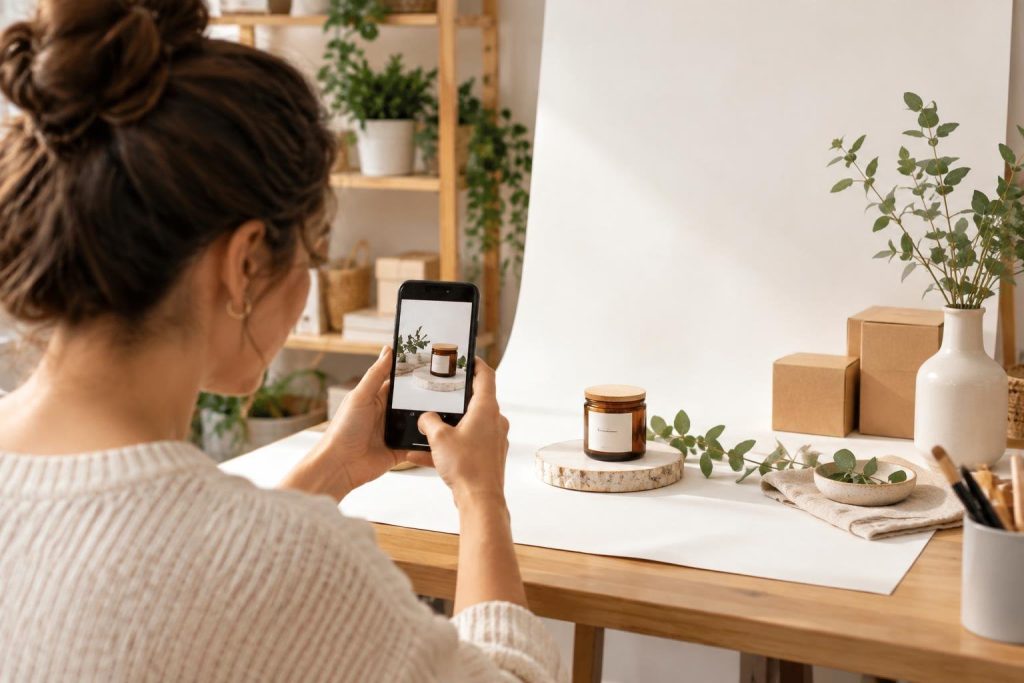
Step 4: Plug-and-Play Promo Ideas for Each Channel
To keep mini launches easy, reuse the same core message everywhere. Here are simple ideas you can plug into your emails, website, and social posts.
Website
- Homepage spotlight: Add a featured section with a photo, 1–2 benefit bullets, and a button to the product page.
- Product page tweak: Add a short note near the top: “This week’s focus: perfect for…” and finish the sentence with your angle.
- Store banner: If your platform allows it, a simple bar like “This week’s pick: [Product] for [use case]” works well.
You don’t need long newsletters. Two short emails can make a big difference.
- Email 1 (Day 1–2): Introduce the focus product, show 1–2 clear benefits, and link to the product page.
- Email 2 (Day 5–7): Share a quick story, review, or before/after, then remind them why it’s useful.
You can even keep a simple email “template” you reuse every week with just a few details swapped in.
Social media
Pick the one or two platforms you actually use. Rotate through these:
- Demo: Short clip or photo series showing the product in use.
- Tip: “One quick way to get more out of [product].”
- Story: Why you made it, or how a customer uses it.
- FAQ: Answer a common question on camera or in a caption.
- Before/after: A simple visual showing the problem and the result.
Save these posts as a checklist. Each week, you can pull 2–3 ideas without starting from scratch.
Step 5: Track Just a Few Simple Numbers
You don’t need complex analytics dashboards to learn from each mini launch. Start with a small, repeatable set of numbers.
- Product page views: How many people visited the product page this week?
- Units sold: How many of this item did you sell during the mini launch?
- Email clicks: How many people clicked the product link in your email?
- Social saves or replies: Did people save, share, or reply to your posts about it?
Most e-commerce platforms and email tools show these stats in their basic reports. At the end of the week, jot them down in a simple tracking sheet.
| Mini Launch # | Product | Angle | Page Views | Units Sold | Email Clicks | Notes |
|---|---|---|---|---|---|---|
| 1 | Desk organizer | Back-to-school setup | 120 | 9 | 38 | Customer photos helped |
| 2 | Soy candle | Nighttime wind-down | 85 | 6 | 22 | Next time: more video demos |
Over a month or two, patterns will start to appear. You’ll see which angles, formats, and products consistently get better responses.
Do I need discounts for every mini launch?
No. Discounts can help, but they’re not required. Many stores run mini launches that focus on use cases, bundles, or bonuses instead, like adding a small freebie, early access to a new scent or color, or a simple perk like upgraded gift wrapping. Use discounts sparingly so they actually feel special.
How often should I run mini launches?
A good starting point is once every 2 weeks. If that feels manageable, you can move to a weekly rhythm. The goal is consistency without burnout, so pick a schedule that you can maintain even during busy seasons.
What if my audience gets bored seeing the same product all week?
Most followers don’t see every post or email you send. And you’re not repeating the exact same message—you’re showing different angles: a demo, a story, a review, a tip. If someone genuinely isn’t interested in that product, they’ll simply scroll past, and you’ll be focusing your energy on the people who are.
Make Mini Launches a Habit, Not a Hustle
Mini product launches work because they’re small enough to actually finish. You choose one product, one angle, and a short plan—and then you repeat. Over time, these little waves of attention add up to steadier sales and a brand that feels active and alive.
You don’t need more complexity; you need a simple rhythm you can stick with. A reliable website, like one hosted on a solid platform such as Webasen, plus a weekly mini launch habit is often more powerful than the occasional giant sale you never quite find time to plan.
Start with one product next week. Give it a clear story, share it in a few simple ways, and write down what happens. Then do it again. Your marketing doesn’t have to be loud to be effective—it just has to be consistent.